Pageant program flow: a practical running order
By Charles · Published 2026-11-14T08:00:00+08:00 · Updated 2026-11-14T08:00:00+08:00
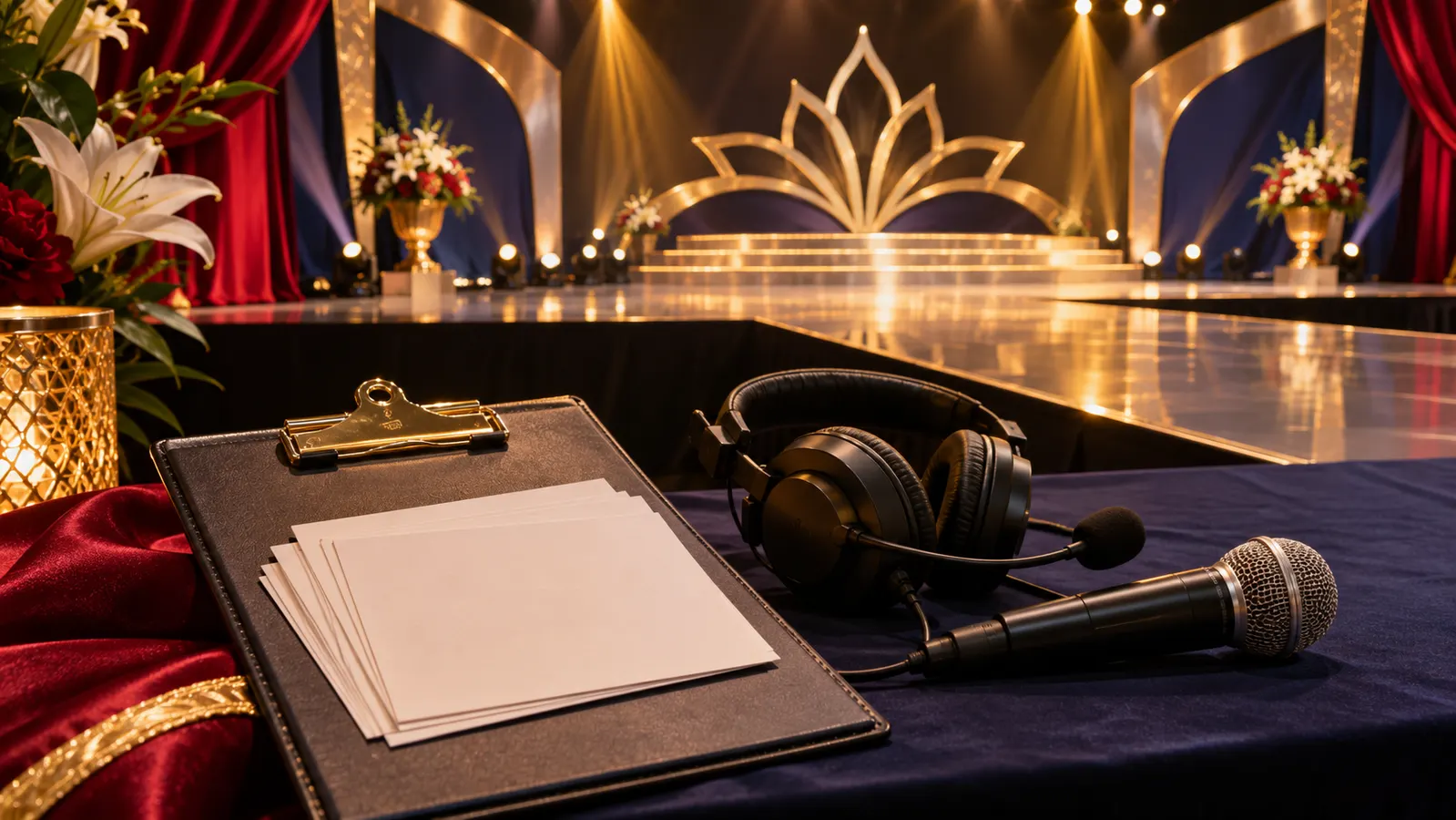
A pageant program flow is the organiser's running order, showing what happens, when it is planned, who leads it and what cues move the event forward. Adapt the fictional table below to your approved competition rules, venue and team; there is no single sequence that every pageant must follow.
Agree on the scoring and handoffs with your officials using the pageant judging criteria guide. For the words the host will say, use the separate pageant emcee script. You can also browse contests on Ganda.
Key facts
- The Province of Pangasinan reported that the Limgas na Pangasinan 2025 pre-pageant included creative costume, personal interview, talent and an artists' video. Those were choices for that event, not required segments for yours. Province of Pangasinan, 15 April 2025.
- BC School Sports' event management manual includes separate opening and awards ceremony templates. It is a sports resource, not a set of pageant rules; it illustrates why separate ceremony cues can help a crew prepare.
- Checked 14 November 2026. The table and roles below are an original planning example, not a published event schedule.
What belongs in a pageant program flow?
Put the segment order, planned start and duration, responsible person and an actionable cue in one shared document. Add the contestant order or a reference to its controlled list, the required music and microphones, who clears the stage, and any dependency before the next segment starts.
The running order is a crew document. The host's script contains the approved words, names and announcements for the host. Keep both aligned, but do not make the sound operator search through a speech for the cue to play music.
Before drafting, agree on the event's categories, judging rules, number of contestants, accessibility needs, venue access, performers and available time. Confirm who can approve a change and who is the single point of contact for results.
What does a sample pageant program flow look like?
This example is fictional. Replace every bracket with your own information, add or remove rows, and set timings after rehearsal. A role may be shared by a small team, but name the person responsible on your working copy.
| Planned start / duration | Segment | Person responsible | Cue or handoff |
|---|---|---|---|
| [time] / [duration] | Doors and audience seating | Front-of-house lead | Tell stage manager when the audience and venue are ready. |
| [time] / [duration] | Welcome and approved reminders | Stage manager | Signal host; sound lowers opening music and opens microphone. |
| [time] / [duration] | Introductions and acknowledgements | Host coordinator | Provide approved names, pronunciations and sponsor wording; cue the next entrance. |
| [time] / [duration] | Contestant opening presentation | Contestant coordinator | Confirm line-up and stage clearance; signal music and entrance. |
| [time] / [duration] | Competition segment [name] | Stage manager | Confirm judges and first contestant ready; cue track and record any hold. |
| [time] / [duration] | Changeover or approved interlude | Backstage lead | Confirm next line-up, costume change and equipment before releasing the hold. |
| [time] / [duration] | Questions or interview [if used] | Question coordinator | Deliver approved questions to host; follow the event's stated procedure. |
| [time] / [duration] | Score collection and verification | Results official | Collect the required records and verify results under the approved rules; tell stage manager when cleared. |
| [time] / [duration] | Awards and crowning | Awards coordinator | Place awards and presenters; give host the verified result card, then cue each presentation. |
| [time] / [duration] | Closing and exit | Stage manager | Cue final remarks and music; direct contestants and audience exits. |
The table does not prescribe a scoring system, a question format or a total length. If interviews or preliminary judging happen on another day, move them to a separate schedule and record how their approved results reach the final event.
How do you turn the sample into a working schedule?
Work backwards from the venue's agreed finish and access times. List the event's fixed commitments, then allocate time to each presentation, contestant movement, announcements, changes and scoring handoffs. Rehearse transitions with the actual line-up where possible, adjust the estimates and leave a clearly identified contingency period.
Give each cue an observable trigger. For example, write “play entrance track when the stage manager signals that the first contestant is at the entrance,” instead of “play music after welcome.” Mark who has the track, which microphone is used and who confirms the next person is ready. Add a safe hold cue and an approved filler or pause plan for a delayed changeover.
Number or date versions and identify the current one. After a change, tell the host, backstage, sound, lighting, judges and front-of-house leads what changed. Avoid sending a revised order to only one person while everyone else works from an older copy.
How should judging and results fit into the flow?
Schedule the handoffs specified by your own approved rules. Identify which segments judges assess, where score sheets or other records go, who checks them and who authorises the final result. The pageant judging criteria guide can help you prepare that discussion; use your event's actual rules for decisions.
Do not put an unverified winner's name into the host's script. Give the host a result card only after the designated results official has checked and approved it. If a result is missing, ambiguous or disputed, hold the announcement and use the event's correction procedure. Give the stage manager a neutral way to tell the host to pause without guessing at a result.
For a question segment, confirm who selects and delivers questions, what language and instructions will be used, and what the host should do if a question must be repeated. The pageant questions and answers guide is a starting point for preparation, not a substitute for your approved procedure.
What should the team rehearse and check?
Walk through the order with the people who will run it. Confirm entrances and exits, access routes, microphones, music files, lighting cues, award placement and how crew communicate. Include contestant changes, the handoff to judges and the transfer of the verified result card. Check names and pronunciations with the people involved.
Ask the venue about its emergency instructions and identify who will communicate them. Agree what to do if audio fails, a contestant needs assistance or the event runs late. The person authorised to change the order should decide which optional item to shorten or move; preserve the event's agreed competition and results procedures.
At the final briefing, distribute the current running order and contact list, check who holds each role, and give the host the matching emcee script. After rehearsal, correct the timings and cues that did not work.
Use the table as a starting point, then approve and rehearse the version for your event. Browse contests on Ganda to explore the contest pages.
Frequently asked questions
What is a pageant program flow?
It is the organiser’s running order for the event, showing each segment, its planned timing, the person responsible and the cues or handoffs needed to move to the next item.
Does every pageant need the same segments?
No. Choose segments that fit the event’s approved rules, contestants, venue and available time. The sample in this guide is fictional and adaptable.
How is a program flow different from an emcee script?
The program flow coordinates the event for the whole team. The emcee script supplies the host’s approved words and relevant cues within that order.
Who should confirm the results before they are announced?
Assign a designated results official under your event’s rules to verify the result and deliver an approved announcement to the host. If anything is unclear, pause and confirm it before announcing.